



25 teachers and doctoral students from the 2024 class of the Doctor of Business Administration (DBA) program of School of Business (MSB) of Macau University of Science and Technology (MUST) participated in a study tour and enterprise research trip to Singapore from 2 to 6 June 2026. Led by program director Associate Professor Zhang Zhuo, the team conducted a five-day business research and academic exchange program in Singapore. The study tour aimed to broaden students’ global perspectives by visiting local universities, research institutions, and representative companies to gain a deeper understanding of Singapore’s advanced experiences in urban governance, technological innovation, and industrial development.
The research team arrived at the National University of Singapore (NUS) on June 3. They were welcomed by Mr. Wang Donghai, Director of the NUS Office of Industry-University Cooperation and the Centre for Corporate Innovation, who is also the head of the NUS Graduate Research Innovation Programme. Mr. Wang introduced the history and status of NUS and highlighted the university’s successful experience in promoting industry-university cooperation and business incubation. The team then went on with a campus tour. In the afternoon, the team attended a lecture at the NUS Business School by Professor Gu Qingyang of the Lee Kuan Yew School of Public Policy, with a theme of “Global Trends and Corporate Internationalization”. In the lecture, Professor Gu pointed out that significant differences exist between East and West in their narratives and value expressions during the globalization process. He proposed the concept of “intermediate products”, emphasizing that international cooperation should avoid one-way output and instead build a multi-win value network. This concept sparked discussion among students and helped them recognize the crucial role of cross-cultural communication and collaboration in future corporate competition.
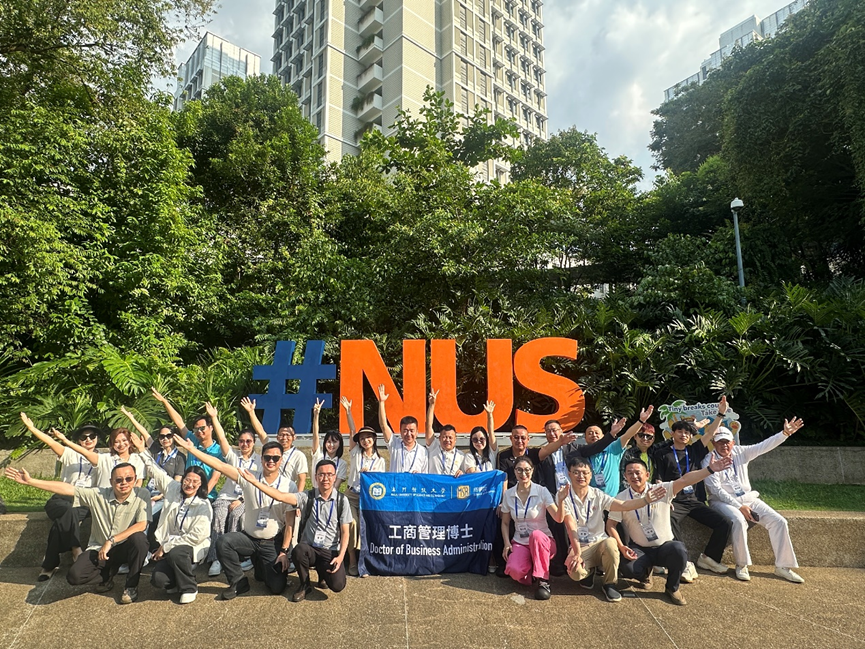
Group photo of the DBA teachers and students at the National University of Singapore
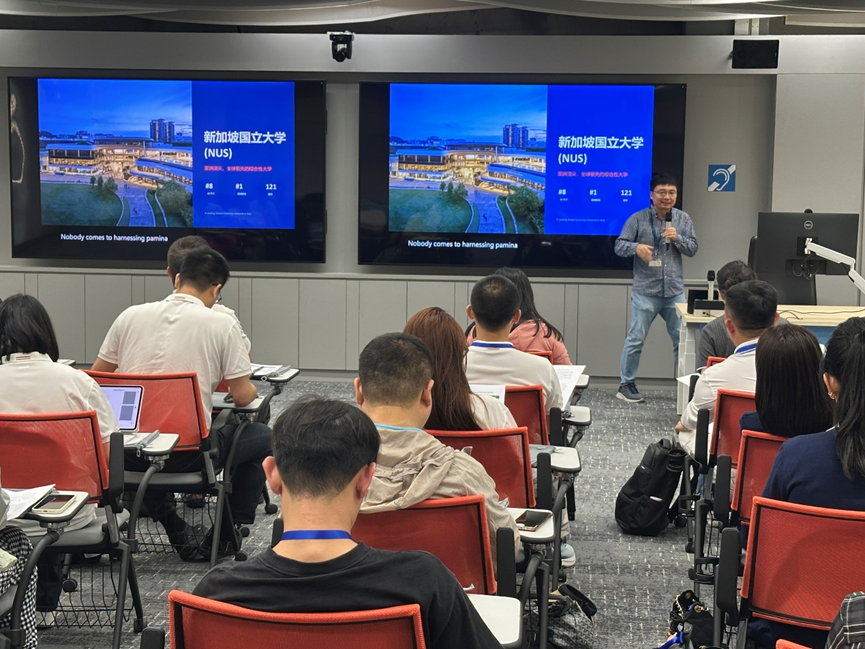
Mr. Wang Donghai introduced the university-industry cooperation project
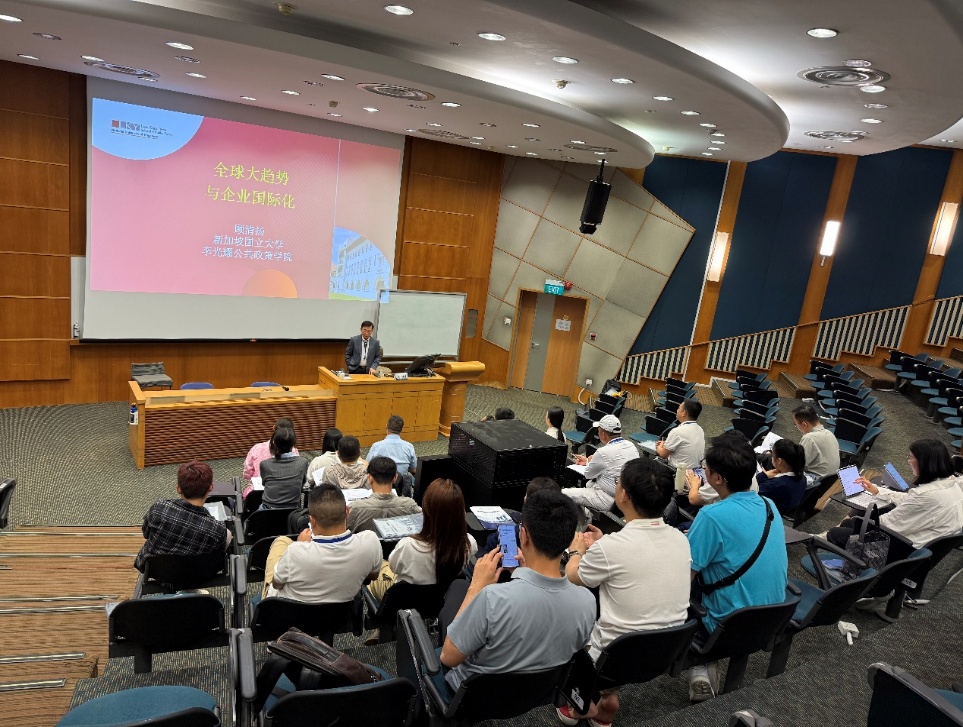
Professor Gu Qingyang delivered a keynote speech
On June 4, the research team visited the Temasek Life Sciences Laboratory. Director Li Jiajun, the project leader, provided a detailed introduction to the Temasek Group’s overall structure and its strategic layout in the life sciences field. Leveraging Singapore’s international hub advantages, Temasek has built up a complete ecosystem from basic research to industrial transformation, demonstrating outstanding research capabilities and technology transfer capabilities in the Asia-Pacific region, and serving as a bridge connecting Chinese innovation with Southeast Asian and global markets. The institute currently focuses on practical social issues and has achieved significant results in areas such as mosquito control and rice emission reduction. During the laboratory visit, the research team observed the research practices and the entire process from scientific research to the implementation of innovative products, gaining a deeper understanding of the specific pathways to “technology empowering industry”.
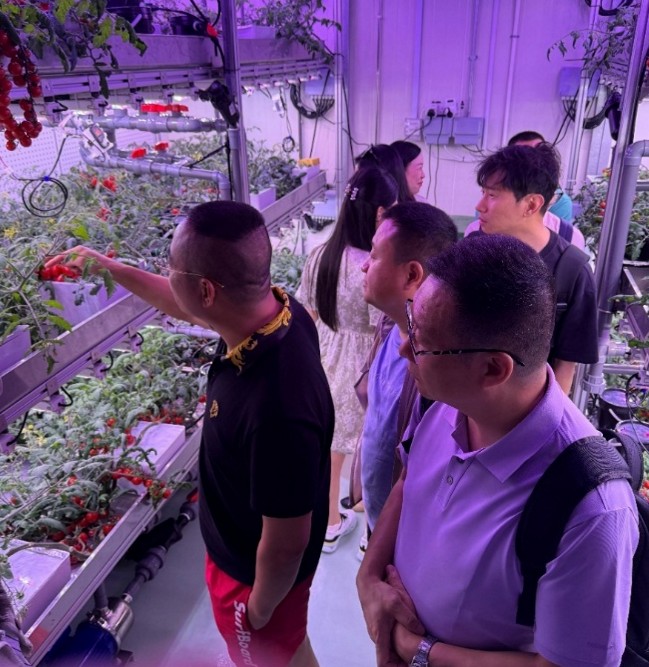
DBA teachers and students visited Temasek Laboratory
That afternoon, the team visited United Overseas Bank (UOB), a multinational financial group. The bank’s manager provided a detailed introduction to Singapore’s stable and transparent financial system and its convenient and efficient cross-border capital flow mechanisms, sharing practical examples of how businesses and individuals can apply these principles to scientific investment and wealth management. This enabled students to further understand Singapore’s institutional advantages as an international financial center, providing practical insights for their own cross-border capital operations and risk management.
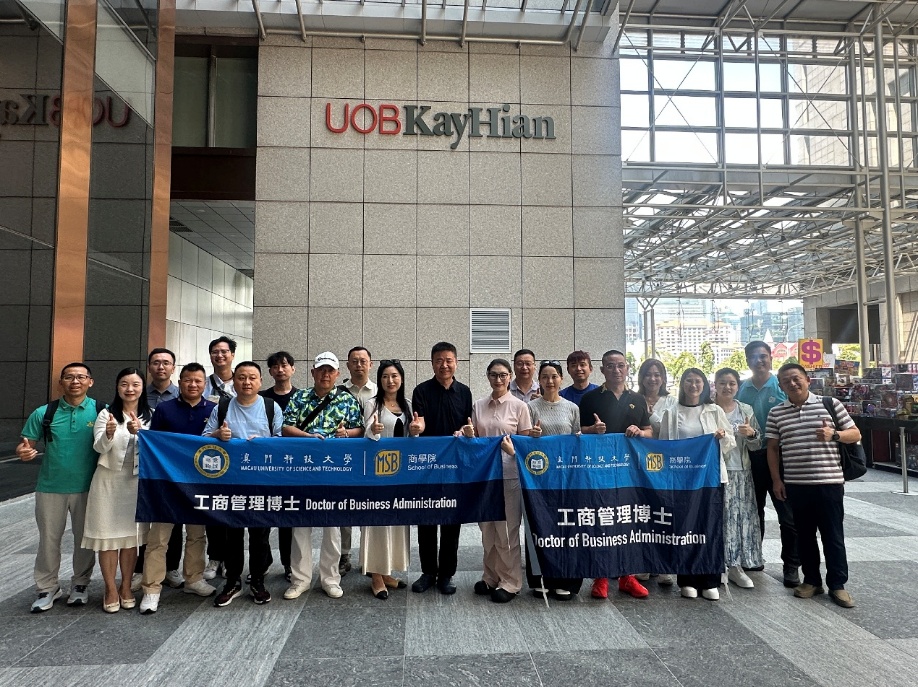
Group photo of the DBA teachers and students at the United Overseas Bank
On June 5, the research team visited ByteDance’s Asia Pacific Center in Singapore. Ms. Dowen, Marketing Director, provided an in-depth analysis of the current state and opportunities in the Southeast Asian e-commerce market. She pointed out that the overall penetration rate of e-commerce in Southeast Asia is currently around 10%, indicating huge development potential. However, significant regional differences exist, with notable variations in population structure, consumption levels, and content ecosystems across countries. Companies need to develop precise localization strategies. She also emphasized that against the backdrop of rapid development in AI and digital human technologies, real-person interaction and a deep understanding of local culture remain irreplaceable and crucial factors for companies to win in the market.
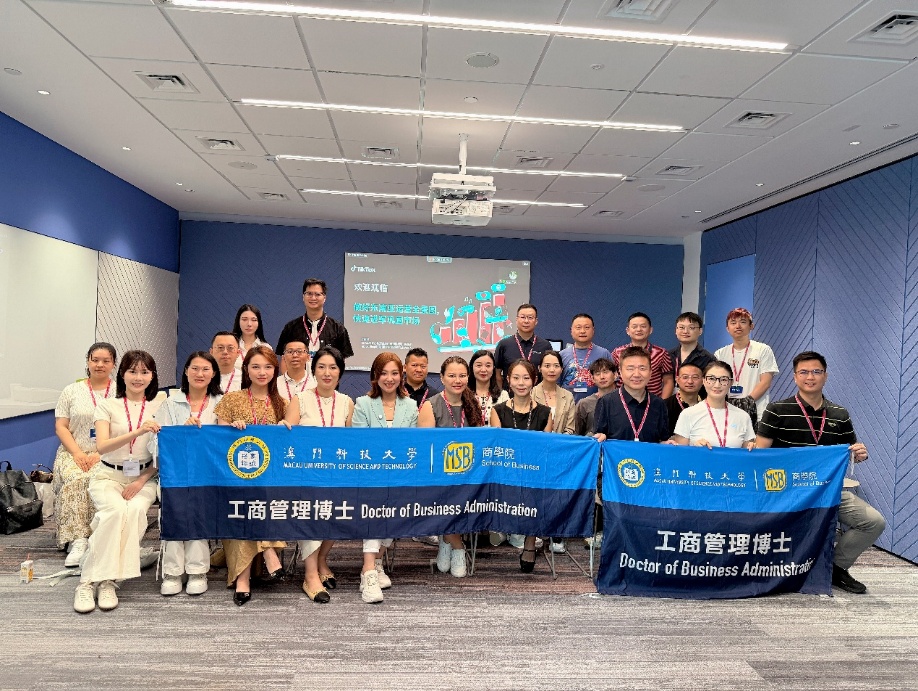
DBA teachers and students visited ByteDance’s Asia Pacific Centre in Singapore
During the debriefing session after the trip, students reflected that this trip improved them in three areas, including cognition, skills, and mindset. In the cognitive dimension, they came to understand the strategic value of Singapore as a “global springboard”, and recognized that companies should upgrade from a single “export-oriented” approach to “global industry layout”. In terms of skills, they believed companies need to transform from traditional “channel management” to “building cross-cultural ecosystems,” using empathy and local insights to drive product innovation. As for mindset, they emphasized the need to shift from a “short-term arbitrage” mindset to “long-term symbiosis,” to build a sustainable path for international development. This learning trip deepened students’ systematic understanding of “integration, synergy, and evolution”. While enhancing their cross-cultural communication abilities, it also prompted them to think further about how, in the age of artificial intelligence, to reshape the core competitiveness of individuals and organizations.
(Contributed and reviewed by Associate Professor Zhang Zhuo, format reviewed by Helen Kam)

