


The School of Business (MSB) at the Macau University of Science and Technology (MUST) held its inaugural Doctor of Business Administration (DBA) Entrepreneurial Innovation Forum at N101 Hall of MUST on 28 March 2026. Centered on the core theme “AI-Driven Digital Transformation: From Competitiveness Enhancement to Sustainable Corporate Development”, the forum brought together over 100 DBA faculty members and students to deeply explore new models of enterprise innovation and development within the context of the AI era. The forum invited several outstanding past and current DBA students who have excelled in the AI field to serve as keynote speakers, including Dr. Chen Yansheng, Dr. Song Huitong, and Dr. Zhang Bowen. This forum combined keynote speeches with roundtable discussions to present attendees with an academic feast featuring both intellectual depth and practical breadth.
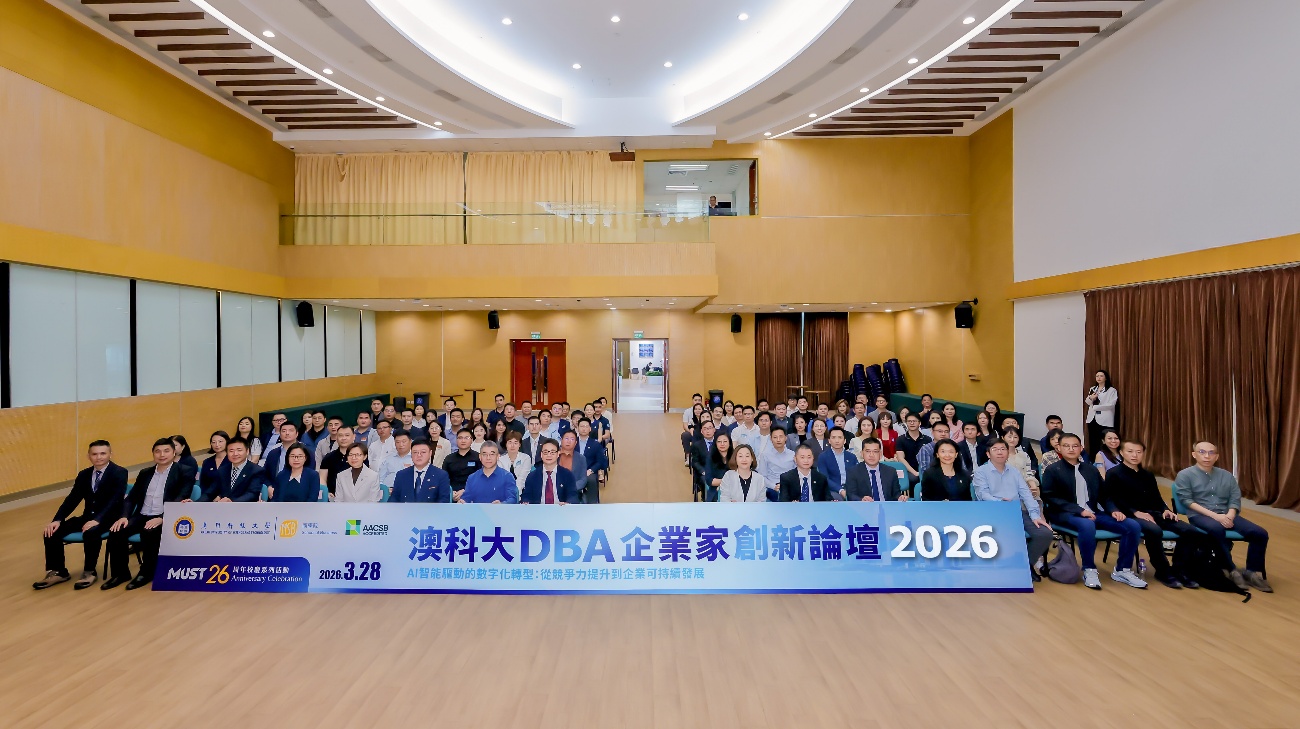
Group photo of the participating faculty members and students
At the start of the forum, Professor Ni Sheng, Dean of MSB, delivered a warm welcoming speech. She led participants in a review of MSB’s 26-year development journey and focused specifically on the DBA program, which carries the School’s original aspirations and visions since its inception. Since the University’s establishment in 2000, the DBA program has enrolled and trained over a thousand students who come from various industries as managers and leaders of enterprises and institutions. These students bring rich practical experience into the classroom to refine their thinking and improve themselves, and after graduation, they continue to shine and contribute to society in their respective fields with strong determination. Looking toward the future, the MUST DBA program aims to cultivate “scholar-type” leading entrepreneurs and managers who possess both technological literacy and a global perspective.
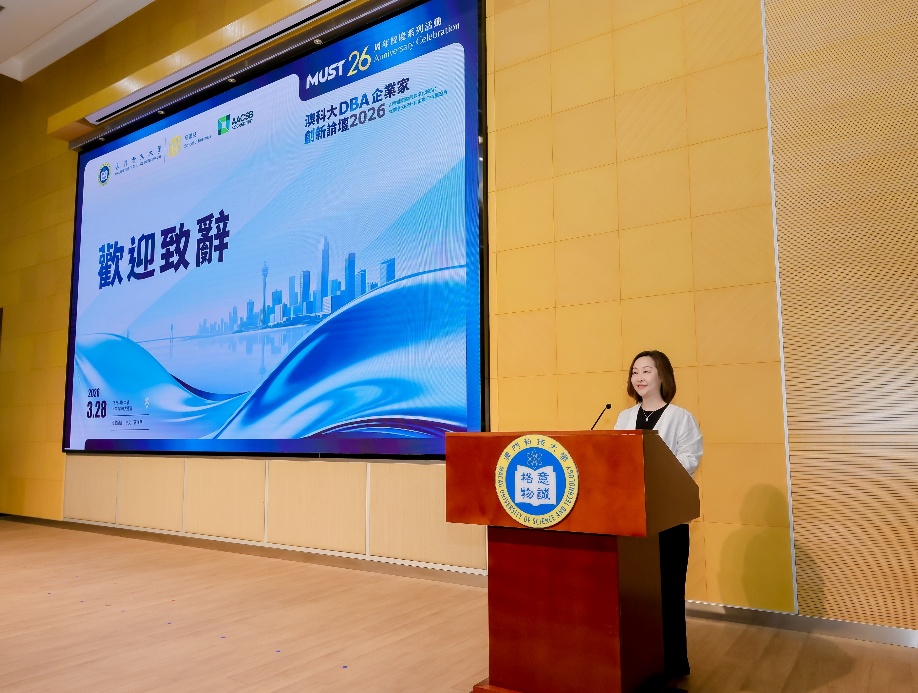
Welcome address by Professor Sheng Ni, Dean of MSB
During the keynote speech session, the three guest speakers respectively delivered their keynote presentations. Dr. Chen Yansheng introduced about the topic “AI-Empowered Computing Power Foundation: A New Paradigm for Digital Transformation of Energy Enterprises Driven by Zijin Cloud”, sharing Zijin Cloud’s cutting-edge explorations in the digital transformation of the energy industry. He systematically elaborated on the key value of token encapsulation in the AI era, focusing on its core function. Dr. Chen pointed out that tokens can be considered the “measuring stick” of wisdom in the AI era, not only measuring the output of cognitive labor and realizing the transformation from information volume to intellectual value, but also representing the crystallization of probabilistic deduction and knowledge accumulation. In cross-border digital trade and the construction of a global energy digital network, tokens provide a new carrier for value circulation. He also explored in depth how tokens can achieve precise value anchoring with computing power and green electricity, as well as the construction path of related standardization systems, providing innovative ideas and practical frameworks for the digital transformation of energy enterprises.
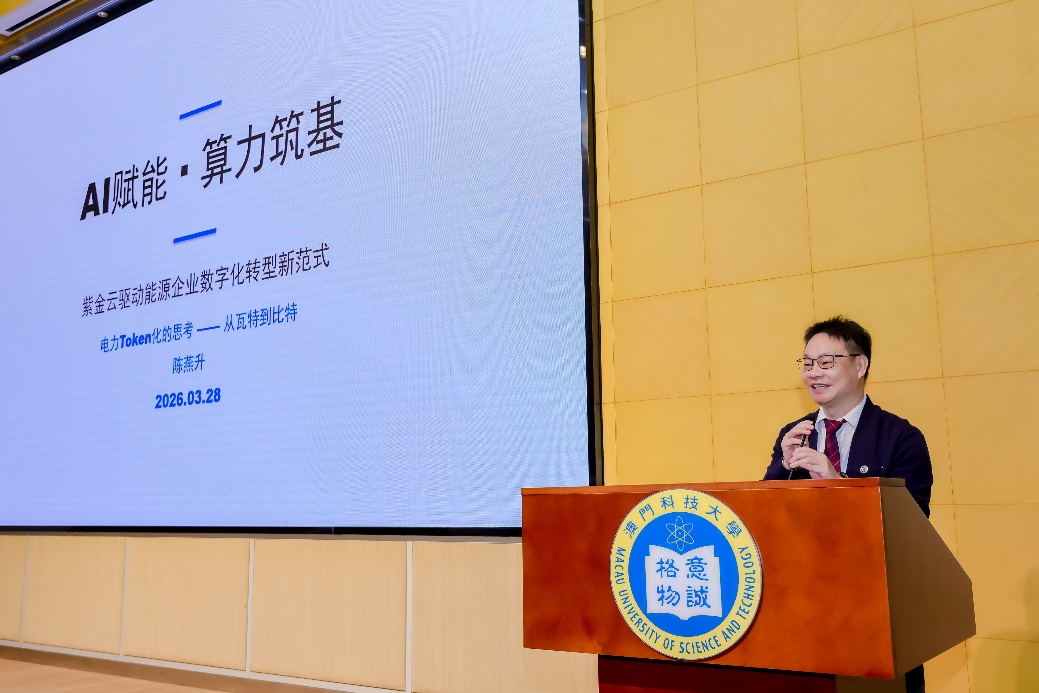
Dr. Chen Yansheng delivered the keynote speech
Dr. Song Huitong delivered a keynote speech entitled “Innovating Media Education with Domestic Technological Advantages – AI-Powered Shooting”, showcasing the application achievements of AI in the new media field by integrating camera technology with AI camera movement. He introduced AI’s technological breakthroughs in areas such as intelligent composition, dynamic tracking, and image optimization, and shared how these technologies significantly improve the teaching efficiency and content quality of media education. Furthermore, Dr. Song provided an in-depth analysis of the structural changes in AI innovation models under the global cloud collaboration context, exploring the boundaries and value reconstruction of human-machine collaboration. Dr. Song proposed the viewpoint that “AI does not replace photographers, but rather reconstructs the entire image production chain” sparked broad resonance among participants and provided a brand-new perspective and theoretical support for the intelligent upgrade of the media industry.
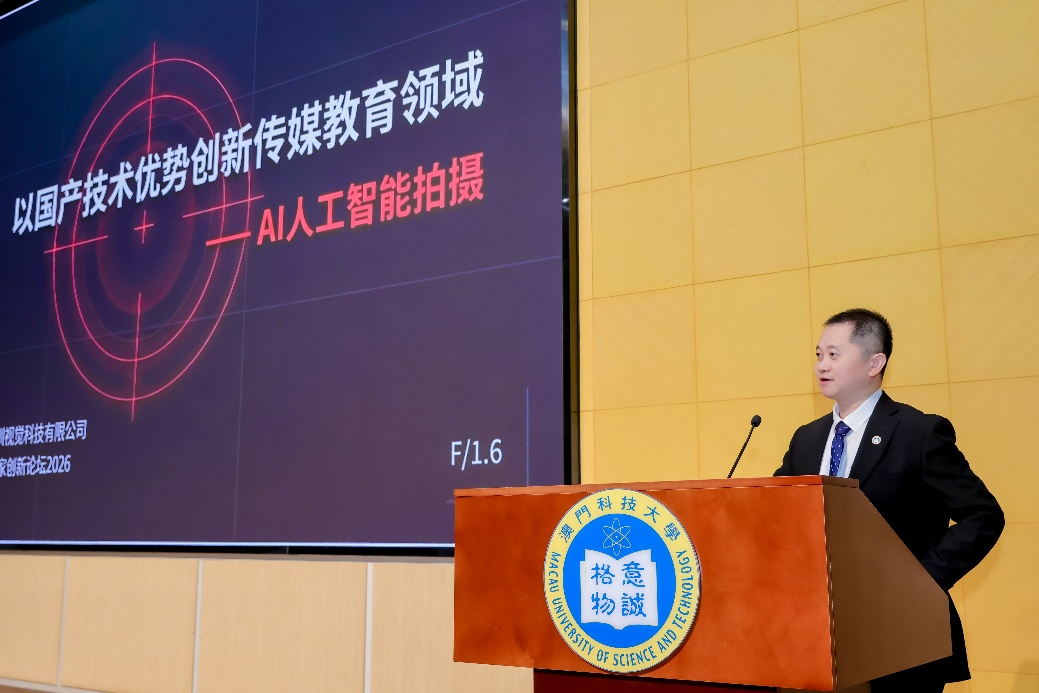
Dr. Song Huitong delivered the keynote speech
Dr. Zhang Bowen presented his keynote speech titled “Rooted Symbiosis: New Research Institutions Driving the Organic Growth of the AI Industry Ecosystem”, shared cutting-edge technological achievements based on the realities of industry-academia integration in the Guangdong-Hong Kong-Macao Greater Bay Area. These achievements included MoonBit’s next-generation AI native software delivery platform, the SPU next-generation confidential computing auxiliary processor, and the DINO-X general-purpose visual large model. Building upon a systematic analysis of the Greater Bay Area’s advantages in AI industry development, Dr. Zhang focused on current bottlenecks such as low efficiency in the transformation of scientific research results and insufficient regional resource collaboration. He proposed that innovation in government-enterprise collaboration mechanisms should be implemented to promote resource sharing and complementary advantages, constructing a closely linked innovation network. He advocated for setting up a “rooted symbiosis” industrial ecosystem to promote deep integration between research institutions and enterprises, thereby cultivating a globally competitive AI industry cluster and contributing to the high-quality development of the Greater Bay Area.
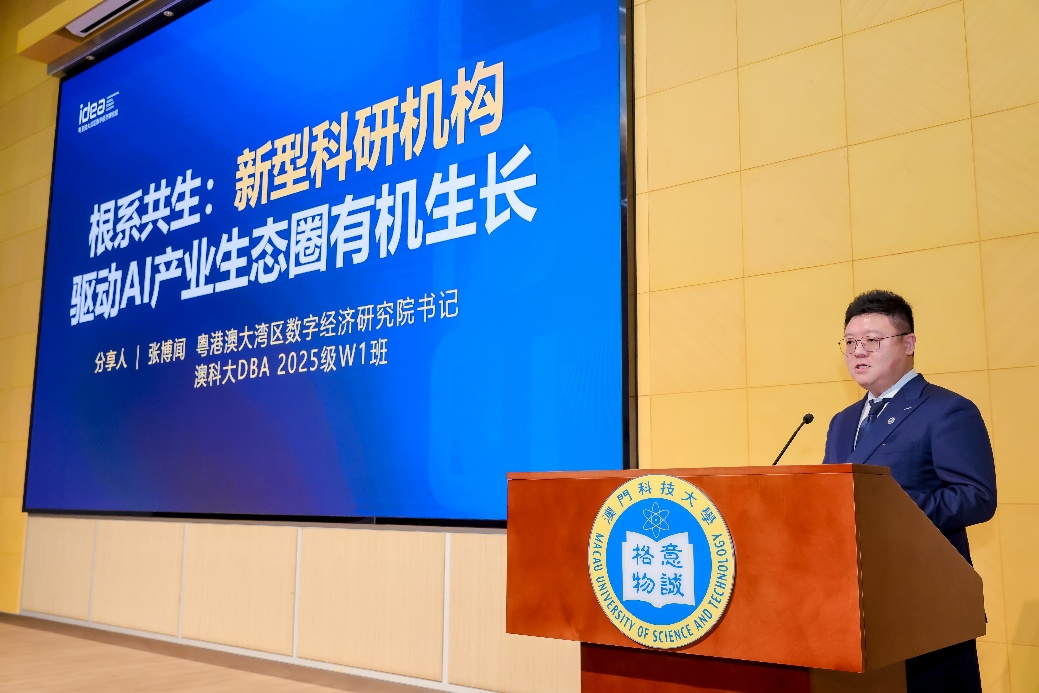
Dr. Zhang Bowen delivered the keynote speech
In the subsequent roundtable discussion session, Dr. Haimin Hu, Head of the Corporate Strategy Department and Manager of the Response Center at the Investment Banking Capital Consulting Headquarters of Sinolink Securities; as well as Dr. Yang Song, Director of Information Security Technology at Huawei Cloud, were invited to join the three keynote speakers in exploring the topic “How AI-driven digital transformation can move from ‘value exploration’ to ‘value implementation’.” The roundtable discussion was moderated by Associate Professor Zhang Zhuo, head of the DBA project at MSB. The guest speakers analyzed the core challenges faced by enterprises in the process of digital transformation from multiple dimensions, including technology implementation, organizational change, and data security, and proposed practical and feasible solutions.
Dr. Yang Song focused on discussing data security and compliance boundaries in enterprise AI applications. He emphasized that throughout the entire process of data acquisition, storage, and use, enterprises must strengthen risk control mechanisms and seek a dynamic balance between technological innovation and compliance requirements to ensure the safe, reliable, and sustainable operation of AI systems. The forum also discussed hot topics such as why OpenClaw has become a new trend in AI and how to use AI to achieve “safe shrimp farming”, with active interaction and a lively atmosphere, fully demonstrating the sparks of wisdom from cross-disciplinary thinking.
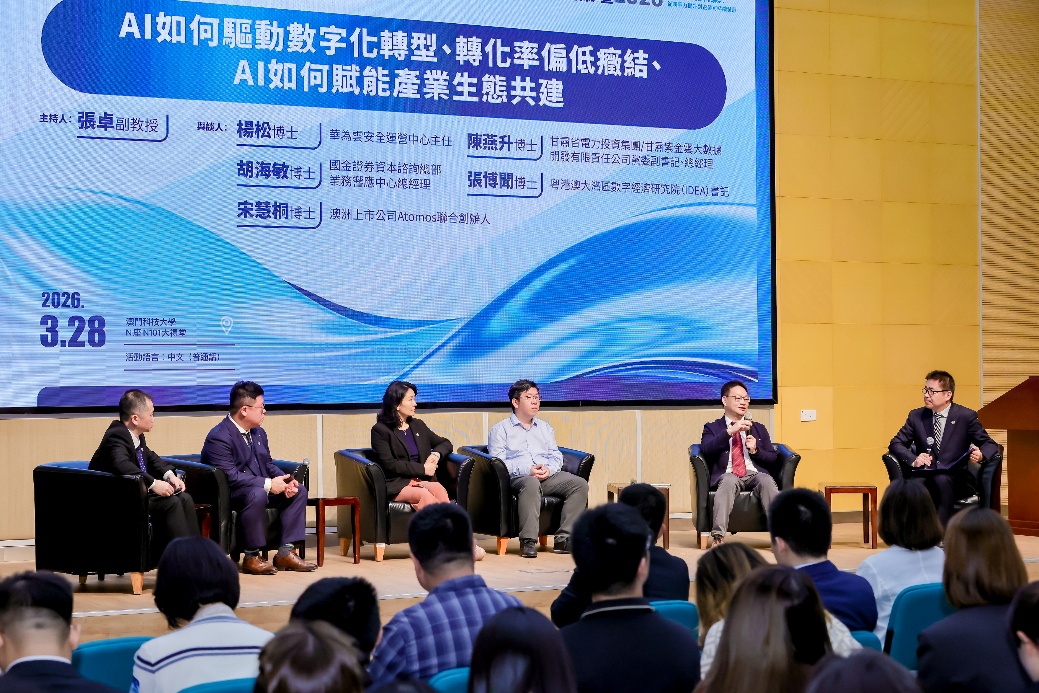
Guest speakers at the roundtable discussion session
(from left: Dr. Song Huitong, Dr. Zhang Bowen, Dr. Hu Haimin, Dr. Yang Song, Dr. Chen Yansheng, Associate Professor Zhang Zhuo)
The successful hosting of the inaugural DBA Innovation Forum by MUST MSB provided DBA students with a high-level platform for academic exchange and cross-disciplinary intellectual exchange. Through keynote speeches and roundtable discussions, participants not only gained a deeper understanding of the latest advancements and industry applications of AI technology, but also acquired systematic thinking and practical methods for driving enterprise digital transformation. This forum inspired innovative thinking in the AI era and broadened the management’s strategic vision, which will empower DBA students to continue leading industry change in the new era and inject new momentum into the intelligent transformation of the economy and society.
(Contributed and reviewed by Associate Professor Zhang Zhuo, format reviewed by Helen Kam)

